Seat Belt Statistics – The Good and The Bad
/in Blog/by Chris CockayneYou’ve been told your whole life to “buckle up” after getting into a vehicle and before hitting the road. You likely heard it from your parents or other family members, and you have definitely heard it from local police officers and prominent leaders.
Table of Contents
ToggleIf you’ve ever stopped to question whether using a seat belt is really necessary, you aren’t alone. Some find seat belts just downright uncomfortable! Fortunately, plenty of information collected about car accidents and seat belts is used to help you make up your mind about seat belts.
In this article, we’ll explain the benefits of wearing seat belts, their limitations, and real-world statistics that help you make informed decisions every time you drive.
What the Numbers Say About Seat Belt Safety
Here are a few seat belt statistics:
- First off, the CDC reports that car accidents are the leading cause of death for those between the ages of 1 and 54 years.
- NHTSA statistics show that in 2024, 22,713 passengers died in car accidents, and nearly 48% of those killed were not wearing a seat belt.
- According to the National Highway Traffic Safety Administration, seat belt use reached 91.3% nationwide in 2025; that was 86.1% in 2012. This shows most Americans recognize that seat belts make them safer.
Most U.S. states require seat belt use. States with primary enforcement laws, including Utah, allow officers to stop drivers solely for not wearing a seat belt. This increases usage rates.
What Are the Benefits of Wearing a Seat Belt?
Studies have shown that when it comes to moderate-to-critical injuries, those who wear seat belts reduce their risk of injury by 50 percent.
Insurance Institute for Highway Safety (IIHS) reports show seat belts reduce fatal injuries in a crash by 45% in cars and up to 60% in SUVs, vans, and pickup trucks. Only about 80% of rear-seat passengers use seat belts, a lower rate than for front-seat passengers.
Seat belts also work to keep passengers restrained in the vehicle, which is an important function, as being ejected from a vehicle drastically increases the odds of fatality. The NHTSA reports that in 2008, 77 percent of accidents resulted in fatality when the occupant was ejected from the vehicle.
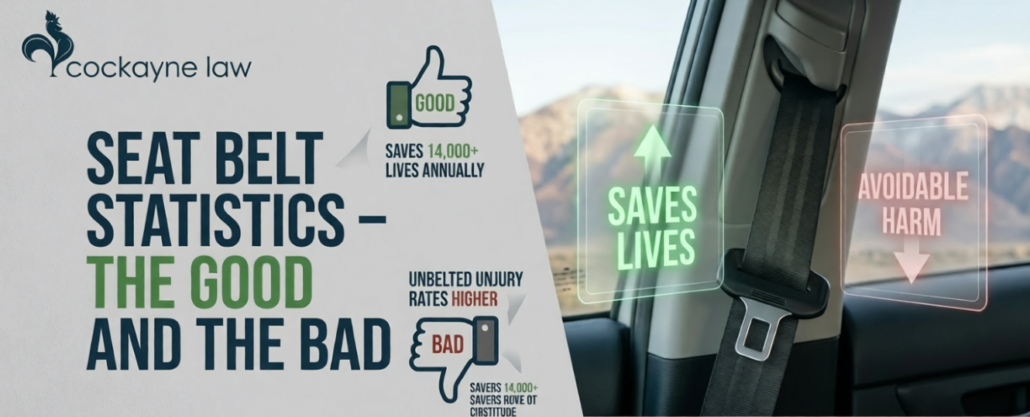
Seat belt use saved approximately 14,955 lives in a single year (NHTSA). Use caution and use them correctly, but do use your seat belt. Seat belts are also designed to work together with other vehicle safety systems. Airbags protect during a crash, but they are not intended to replace seat belts. In fact, airbags are most effective when occupants are properly restrained.
Seat belts help distribute crash forces across stronger parts of the body, such as the chest, pelvis, and shoulders. This reduces the likelihood of occupants striking the steering wheel, dashboard, windshield, or other passengers during a collision.
Despite decades of safety research, some drivers still hesitate to wear a seat belt. Understanding their concerns helps us understand why seat belt use is not 100% worldwide.
Why Some People Still Avoid Seat Belts
Many drivers still have misconceptions about seat belts, and therefore, they avoid wearing them. They do not even consider the decades of safety research worthwhile when it comes to wearing a seat belt. Some believe seat belts are unnecessary, while others find them uncomfortable.
Common myths include:
- “I’m only driving a few minutes.”
- “Airbags are enough.”
- “I’m a careful driver.”
- “Seat belts trap people in fires.”
However, many crashes happen close to home and without warning. While seat belts cannot prevent every injury, they significantly reduce the risk of severe injury and death. They are not meant to eliminate all risk but to provide an essential layer of protection alongside safe, defensive driving.
The Risks and Limitations of Seat Belts
Although seat belts save lives, they do have limitations. No safety device can guarantee complete protection in every accident.
High-speed crashes can still result in serious injuries, even when everyone is properly restrained. Vehicle size, impact angle, road conditions, and crash severity can all influence the outcome of an accident.
According to the 2020-2024 statistics published by Highway Safety Utah,
- 323 lives could have been saved between 2020 and 2024 by simply buckling up.
- More than 1 in 3 children (about 36%) killed in crashes were not properly restrained.
- Over 1 in 3 young adults (about 37%) ages between 15 and 29 involved in fatal or serious crashes were not wearing a seat belt.
- About 60% of occupants traveling between midnight and 4 a.m. were not buckled up.
Seat belts must also be used correctly. A loose or improperly positioned seat belt may not provide the intended protection during a collision. In some situations, incorrect use can even contribute to additional injuries.
Understanding these limitations is important. Seat belts should be viewed as one layer of protection rather than a guarantee of safety.
Can Seat Belts Cause Injuries?
Seat belts are life-saving equipment. However, in severe crashes, seat belts can cause injuries that are usually far less severe than those suffered by occupants who are not wearing one. These include:
- Bruising
- Chest soreness
- Shoulder marks
- Rib fractures
- Abdominal injuries
- Collarbone injuries
- Soft tissue injuries
- Seat belt syndrome
While these injuries can be painful, they are often far less severe than the injuries that may occur when a person is completely unrestrained during a collision. That is why experts recommend not traveling without a safety belt.
Seat Belt Injuries vs. No Seat Belt Injuries
Seat belts may cause minor bruising or soreness, but these risks are far lower than the severe or fatal injuries linked to not wearing one, especially from ejection.
Here is the comparison formatted as a scannable table to clearly contrast the two scenarios:
Scenario | Common Injuries | Severity & Cause |
With a seat belt |
| Minor to Moderate: Caused by the belt absorbing crash forces. |
Without Seat Belt |
| Severe to catastrophic: Caused by striking the interior (windshield or steering wheel) or ejection. |
How to Wear a Seat Belt Properly
In order to keep you safe, seat belts also need to be worn properly. When improperly used, they may do more harm than good. Be sure to sit properly in your vehicle’s seat, and make sure the seat belt fits you snugly and securely.
The lap belt should rest across the hips and upper thighs, not the stomach. The shoulder belt should cross the center of the chest and shoulder without being placed behind the back or under the arm.
Drivers should also maintain a proper seating position and adjust their seat so they can comfortably reach the pedals and steering wheel while remaining fully restrained. Beyond safety considerations, seat belt use can sometimes become an issue in personal injury claims after a crash.
Seat Belt Use and Utah Injury Claims
Serious crashes place a heavy financial burden on the victim through medical bills, lost income, and ongoing treatment. In Utah, most injured drivers and passengers often get Personal Injury Protection (PIP) coverage benefits in the initial stage.
However, if your injuries meet Utah’s legal threshold, you may be entitled to more compensation from the at-fault party. You should act quickly because most accident claims have short deadlines.
After an accident, you should seek medical attention as soon as possible and report the incident to law enforcement. After that, get a copy of your accident report, document your injuries, and contact your insurance company. These steps help protect your health as well as future legal claims.
If you’ve been injured in an accident, whether it’s minor or serious, speaking with an experienced attorney is beneficial. A professional car accident attorney can help you understand your insurance coverage and legal options and whether you may be entitled to additional compensation.
Conclusion
The statistics are clear. Seat belts reduce the risk of serious injuries and save thousands of lives every year. At the same time, they are not perfect and can sometimes contribute to injuries during a collision.
The important thing to remember is that most seat belt-related injuries are significantly less severe than the injuries commonly suffered by unrestrained occupants. Wear your seat belt properly every time you travel.
FAQs - Frequently Asked Questions
What happens if you do not wear a seat belt?
It ultimately increases the risk of serious injury, even death in some cases. Even low-speed accidents can cause severe bodily injuries that take months to recover from.
Can a seat belt fail during a crash?
It’s very rare. Modern seat belts are designed to lock during a collision or a car crash and work with airbags to protect the passengers. But defective ones can fail.
Are seat belts effective in every type of accident?
For most accidents, yes. It helps protect you during frontal, side-impact, and rollover crashes. Keep in mind, no safety device prevents every injury. However, seat belts significantly reduce the risk of injury.
Does wearing a seat belt affect a car accident claim?
Yes, it can. Insurance companies may argue that your injuries are worse because you did not wear a seat belt. This can reduce your claim depending on the facts.

Chris Cockayne is a Utah-based personal injury attorney and the founder of Cockayne Law. Chris focuses exclusively on representing victims of car accidents, dog bites, and other injury claims, helping clients recover compensation for medical bills, lost wages, and long-term care. With over 15 years of legal experience, Chris has handled a wide range of personal injury and motor vehicle accident cases and is known for his client-focused advocacy and strong negotiation with insurance companies. Know more about Chris Cockayne or my other social profiles like Avvo | Martindale | lawyers | Findlaw | Yelp | lexinter | Linkedin | Facebook | and X
This post is also available in: Spanish