
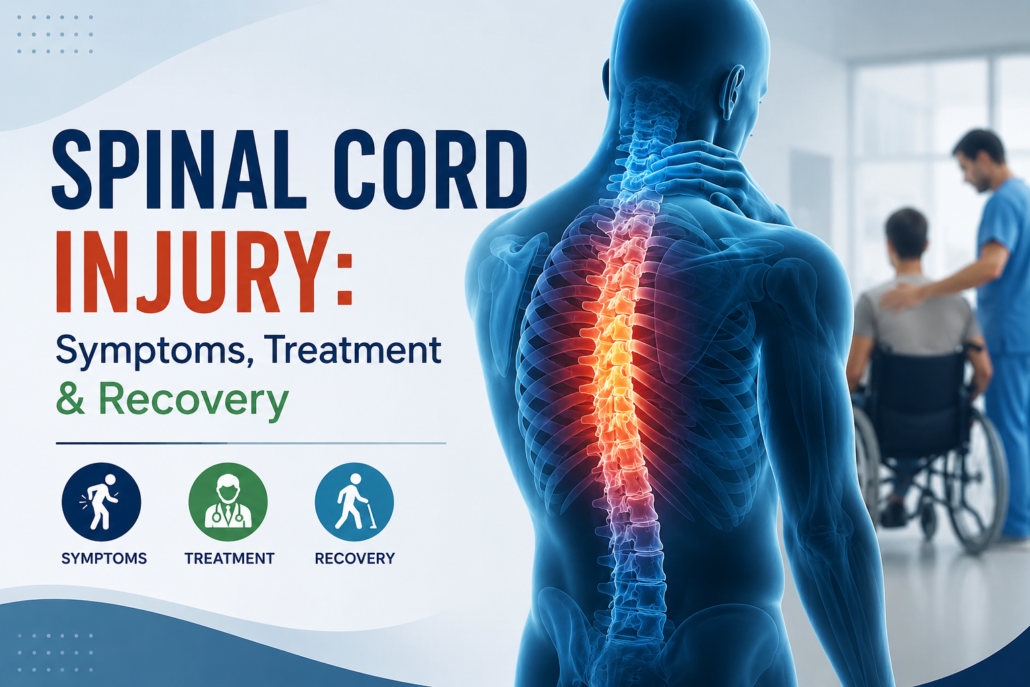
Spinal Cord Injury: Symptoms, Treatment & Recovery
A spinal cord injury (SCI) is complete or incomplete damage to the spinal cord, the bundle of nervous tissues and cells, that causes permanent changes in sensation and loss of voluntary control below the site of the injury.
According to the National Spinal Cord Injury Statistical Center (NSCISC), approximately 282,000 people are living with SCIs each year. The current average age of injury is 42 years, and males account for 80% of new SCI cases.
Symptoms can range from mild numbness and weakness to complete paralysis, depending on where the injury occurs and how severe the damage is. Recovery, too, varies widely: some people regain significant function with early treatment and rehabilitation, while others face lifelong changes.
In this guide, we’ll cover the key symptoms of spinal cord injury, how it’s diagnosed and treated, what recovery typically looks like, and when it’s time to speak with a medical or legal professional about next steps.

What Is A Spinal Cord Injury?
A spinal cord injury occurs when there is damage to your spinal cord, and the communication system is disrupted between your brain and the rest of the body. The spinal cord is a dense bundle of nervous tissue and cells. It extends from the lower brainstem through the vertebral column, carrying sensory signals and transmitting motor signals that control sensation, movement, and automatic functions.
A person can be a victim of SCI from such traumatic events as falls, sports injuries, motor vehicle accidents, or an act of violence. Not only traumatic, but some non-traumatic factors can also be caused by SCI, such as tumors, infections, and degenerative conditions. However, the location along the spinal cord and the extent of the injury can differ in severity.
What Are The Types Of Spinal Cord Injuries?
Generally, spinal cord injury is perceived as a single-piece organ, but scientifically, it is a cylinder-shaped column of nerve tissue that is covered by a thin sheet of myelin, running from the brainstem to the lower back. It is further covered by 31 butterfly-shaped vertebrae.
The spine is divided into 4 main sections. Depending on which section gets injured, doctors can tell a person has what type of injury, how severe (extent) the damage is, how to diagnose it, and how to treat it. These are as follows.
- Cervical Spinal Cord Injury
- Thoracic Spinal Cord Injury
- Lumbar Spinal Cord Injury
- Sacral Spine Injury
Cervical Spinal Cord Injury (C1 to C8)
The cervical is the top part of the spinal column, exactly where the brain connects with the spinal cord and where your neck meets your back. This region is known as C1 to C8 (a total of 8 vertebrae). C1 is at the top, and C8 is at the bottom of the column. The numbers go in descending order from the top to the bottom.
These injuries are very serious and severe because they are near the brain. If this area is damaged, it can result in tetraplegia, usually known as quadriplegia. It is a partial or full paralysis affecting all four limbs and the torso. The higher the injury, the more it affects your body. That’s why cervical injuries are the most severe type of injury.
Thoracic Spinal Cord Injury
Consisting of 12 vertebrae, the thoracic spine makes up the upper and middle back, labeled T1 to T12. The injury in this area critically affects the abdomen, legs, and lower back. The patients of TSCI are typically diagnosed with paraplegia, which is paralysis affecting part of the legs and trunk.
In this case, the arms and hands work properly in their normal routine. This injury sits lower down than the cervical spine. As opposed to cervical injuries, the thoracic injuries mainly affect the lower part of the body and leave the upper part of the body unaffected.
Lumbar Spinal Cord Injury
The lumbar spinal cord is located in the lower back of the spine. It is the lowest major section of the spine. It is made up of 5 vertebrae labeled L1 to L5. This is a lower area of the spine that curves inward. When you touch it with your hand, you feel a little bit of an arch. This is the curve that helps you to bend forward.
The vertebrae of the lumbar spine are sturdier and larger because they carry more body weight than the upper section. When a person gets this injury, their legs and hips are affected mainly, but the upper body remains unaffected.
Sacral Spine Injury
The sacral spine is located in the last section of the bone, just above the tailbone. The nerves in that area control the movement of the hips, the back of the thighs, and the groin. The person injured here suffers from some loss of movement and functions in the legs and hips, feelings, and, in some situations, affects bladder and bowel control.
But the positive sign is that in many sacral injuries, many people can still walk accurately. These injuries are the least severe in terms of movement. But still, they affect lower body sensation, bowel movements, and bladder as well.
Spinal cord injuries are classified into two main categories, depending on the location and extent of damage.
- Complete Spinal Cord Injury
- Incomplete Spinal Cord Injury
Complete Spinal Cord Injury
Complete spinal injuries are a type of injury that is extremely severe. When a person’s spinal cord is injured badly, it will eliminate the power of the brain to send or receive response signals below the injury site. For example, paralysis below the waist is a complete lumbar spinal injury. In that case, the upper body remains unaffected, including the hands, arms, sensation, and motor functions.
This condition is called paraplegia. Nevertheless, in the cervical spine, the complete spinal injury ends up affecting the motor functions in the lower and upper body, which is also known as tetraplegia or quadriplegia.
In Complete Spinal Cord Injury
An incomplete spinal cord injury happens when the spine is damaged or compressed but not fully severed. In this case, some signals still get through between the brain and the body below the injury site. Symptoms vary from person to person, so no two cases can be the same.
Depending on the case, a person may lose partial sensation or, in some cases, all of it. Sometimes it leads to triplegia. This is a condition in which either both legs or one arm gets injured and loses sensation or movement. Incomplete injuries make up about 60% of all spinal cord injuries. Many patients recover quickly through physical therapy, rehabilitation, and occupational therapy.
What Are the Common Causes of Spinal Cord Injuries?
There are different reasons a person can get a spinal cord injury, but some of them are very common. These are as follows.
Motor Vehicle Accident
Motorcycles, cars, and trucks are the leading causes of spinal cord injury. When these crashes occur because of another driver’s negligence, a car accident lawyer can help victims understand their legal rights and recovery options. Severe vehicle collisions can also cause a traumatic brain injury when the head strikes the steering wheel, window, or another object during impact.
Falls
Falls are very common among older adults. When a fall occurs because of hazardous property conditions, a slip and fall attorney may help determine whether a property owner can be held responsible.
Sports and Recreation Injuries
Bicycle crashes during recreational riding can also result in severe spinal trauma. In these situations, speaking with a bicycle accident attorney may help injured cyclists explore their legal options.
Acts of Violence
Stab damage and gunshot wounds have become a major cause of spinal cord trauma. It often results in severe and sudden damage.
Medical & Surgical Complications
In some cases, spinal cord injuries are a result of complications while undergoing surgery, for example, tumors, infections, or reduced blood flow to the spine.

Diseases and Degenerative Conditions
Conditions like arthritis, osteoporosis, and spinal cord inflammation can weaken the spine over time, making it more vulnerable to injury even from minor incidents.
What are the symptoms of a spinal cord injury?
Symptoms of spinal cord injuries usually vary with the affected area. However, the SCI is mainly divided into 3 main types, and these are as follows.
Sensory Symptoms
These symptoms convey information to your brain. They inform your brain about the world around you and what’s going on in your body. Your spinal cord controls tactile (touch-based) signals. For example, pressure, temperature, vibration, texture, etc.
It also controls your proprioception, which is your self-working sense. For example, if you bring your hand into a very dark room but don’t touch your nose, that is proprioception.
Some common examples of sensory symptoms are the following:
- Numbness
- Pain
- Tingling or “pins-and-needles” (paresthesia)
Motor Symptoms
These are the signals that travel from your brain to muscles. They tell how your brain moves your body parts. These symptoms are as follows.
- Weakness
- Paralysis
- Spasticity
Autonomic Symptoms
These symptoms are processes that you don’t think about that are commonly known as autonomic dysreflexia (AD). These symptoms include:
- High blood pressure
- Sudden severe pounding headache
- Profuse sweating
- Flushed skin above the injury
How Is a Spinal Cord Injury Diagnosed?
Spinal cord injuries are most probably diagnosed in the emergency room, where doctors determine the location, injury type, and severity and assess their effects on movement and sensation. The doctor often recommends that patients do these tests to diagnose spinal cord damage.
- Undergo a thorough neurological and physical test to see if the injury caused impairment of movement and functions, pain, numbness, or paralysis.
- An X-ray is an imaging test to see a clear picture of a person’s vertebrae through electromagnetic waves.
- A Computed Tomography (CT) scan is a deeper or more detailed picture of the spinal structure.
- Magnetic resonance imaging (MRI) uses magnetic pulses to generate an image of nerves and structures in and around the spine.
How Is a Spinal Cord Injury Treated, and What Does Recovery Involve?
Normally, the treatment of spinal cord injury starts when the emergency responders arrive, and for most cases, they continue for the rest of the patient’s life. Let’s understand the process of treating spinal cord injury.
Emergency Stabilization
The initial step is to secure your spine from further damage by using different processes such as immobilization, airway/breathing support, and imaging to assess the extent of injury.
Surgery
To stabilize the spine, it is necessary to perform surgery using rods and screws, remove bone fragments or fluid pressing on the spinal cord, or relieve swelling around the injury site.
Medication
Many doctors recommend or prescribe medication for the initial stages of injury to reduce inflammation, control pain, and prevent complications like infections, blood clots, etc.
Rehabilitation
Once a spinal cord patient is stable, the rehabilitation process becomes a long-term focus and often includes physical therapy to rebuild mobility and strength, occupational therapy to regain independence and relearn daily tasks, and psychological counseling to cope with the emotional toll of a life-changing injury.
Long-Term And Lifelong Caring
Many spinal-injured patients need ongoing lifelong care for the rest of their lives. This care includes home modification, assistive devices, mobility equipment, and a personal care assistant.
Spinal Cord Injury Recovery: What Are the Long-Term Effects?
The recovery process of spinal injuries varies from person to person, mainly depending on the type of case. Some people regain significant movement and independence, while others face permanent life-altering effects.
Right after a spinal cord injury, there’s often swelling around the spine. During this early period, doctors don’t yet know exactly how much function (movement, feeling, etc.) a person will keep or regain, because the swelling itself can be blocking signals, making things look worse than they might actually turn out to be.
As the swelling goes down and the spine settles/stabilizes over the following days or weeks, doctors get a clearer, more accurate picture of the real damage and can then better predict the person’s likely recovery.
Rehabilitation is a process of recovery that continues for months or even for many years, focusing on physical and occupational therapy and relearning daily tasks.
Long-term effects can include:
- Partial or complete paralysis
- Loss of sensation
- Bladder and bowel complications
- Chronic pain or muscle spasms
- Higher risk of pressure sores and infections
Many people face emotional challenges in these cases. They need lifelong care, home modification, mobility aids, a caregiver, and ongoing medical support.
Who Can Be Held Liable for a Spinal Cord Injury?
Liability for spinal cord injury depends on how the incident occurs with someone. Sometimes more than one party can be liable for spinal cord injury. Potentially liable parties include.
Negligent Driver: A person who causes a car, truck, or motor vehicle accident.
Trucking Companies: These are the ones that fail to follow safety rules or properly maintain vehicles. A truck accident attorney can help investigate liability.
Employers or Contractors: These are responsible for unsafe workplace conditions.
Property Owners: Who allow dangerous conditions that lead to falls or other accidents.
Medical Providers: Those whose negligence causes or worsens a spinal cord injury.
Product Manufacturers: These are the persons who sell defective safety products, vehicles, or equipment.
In most cases, spinal injury results in lifelong medical expenses and lost earning capacity. So identifying every single liable party is most important for the sake of compensation.
What Compensation Is Available After a Spinal Cord Injury?
The restitution for spinal cord injury covers both the costs that you have already faced and the future expenses. It falls into a few categories that are as follows.
Medical Expenses
This includes medical care, surgery, hospital stays, medication, and ongoing treatment, as well as future medical care like other surgeries or long-term therapy.
Rehabilitation Costs
It includes physical therapy, assistive devices, occupational therapy, and mobility equipment, typically required for months or years, and these costs are factored into the claim.
Lost Income and Earning Capacity
Sometimes the injury affects your ability to work temporarily or permanently. In this case, compensation covers lost wages as well as the income you would earn in the future.
Home and Lifestyle Modifications
Many spinal injury patients need wheelchair ramps, modified bathrooms, vehicle adaptations, and home caregivers. These lifelong costs are also a major part of your claim.
Pain and Suffering
Compensation can also account for the physical pain, emotional distress, and reduced quality of life that come with a spinal cord injury, not just the financial costs.
Loss of Consortium
In some cases, spouses or family members can seek compensation for the impact the injury has had on their relationship and family life
How Can a Spinal Cord Injury Lawyer Help?
Having a lawyer to navigate the legal side of injury makes a big difference. A lawyer thoroughly analyzes your case to establish liability, consulting your medical records to document your long-term prognosis, and measuring the massive lifetime costs of care.
Spinal cord injuries caused by motorcycle crashes often result in substantial medical expenses and long-term care needs. A motorcycle accident attorney can help pursue compensation for these losses. Here is how an attorney actively helps you to navigate the legal and financial aftermath of SCI.
Investigating The Cause
An attorney collects the evidence, accident reports, medical records, witness statements, and expert opinions to identify how the injury happened and who’s responsible.
Calculating The Actual Costs
Many people were permanently damaged, so they need lifetime compensation. A lawyer meets with the medical and financial expert to determine the maximum future expenses, such as Medicare, rehabilitation, lost earning capacity, and home modification, instead of paying just current bills.
Dealing With Insurance Companies
Insurance companies always try to cover a case quickly at a much lower cost than your case’s worth. In this situation, the lawyer handles negotiations, so you don’t need to pressure and don’t need to sign an offer that is less than the actual cost of your injury extent.
Identifying All Liable Parties
Once the lawyer clarifies the situation of how the injury happened, there may be more than one party liable. For example, a driver, an employer, a manufacturer, or a property owner. A lawyer identifies every possible source of compensation.
Filing Within the Legal Deadline
Every state has a statute of limitations for filing a case. A lawyer makes sure your case is filed correctly and on time so you don’t lose your right to compensation due to a missed deadline.
Taking the Case to Court If Needed
Many claims settle out of court. An attorney prepares your case as if it’s going to trial, which typically leads to stronger settlement offers and ensures you’re protected if the case does need to go before a judge.

Final Thoughts
Complete or incomplete spinal cord injuries affect far more than physical abilities. These catastrophic injuries impact your independence, financial career, and, most critically, your plans. The recovery process requires emergency care, surgery, and rehabilitation. For severe cases, it becomes a permanent adjustment.
If you are suffering because of someone’s negligence, speak up. Prompt medical treatment and preserving evidence, accident reports, photos, witness testimonies, and medical records are most important to secure your legal rights.
Facing this silently is not a way. We are here to help you understand your options and pursue the compensation you and your loved one deserve. Feel free to contact us today, it’s completely free with no obligation.

Chris Cockayne is a Utah-based personal injury attorney and the founder of Cockayne Law. Chris focuses exclusively on representing victims of car accidents, dog bites, and other injury claims, helping clients recover compensation for medical bills, lost wages, and long-term care. With over 15 years of legal experience, Chris has handled a wide range of personal injury and motor vehicle accident cases and is known for his client-focused advocacy and strong negotiation with insurance companies. Know more about Chris Cockayne or my other social profiles like Avvo | Martindale | lawyers | Findlaw | Yelp | lexinter | Linkedin | Facebook | and X
This post is also available in: