
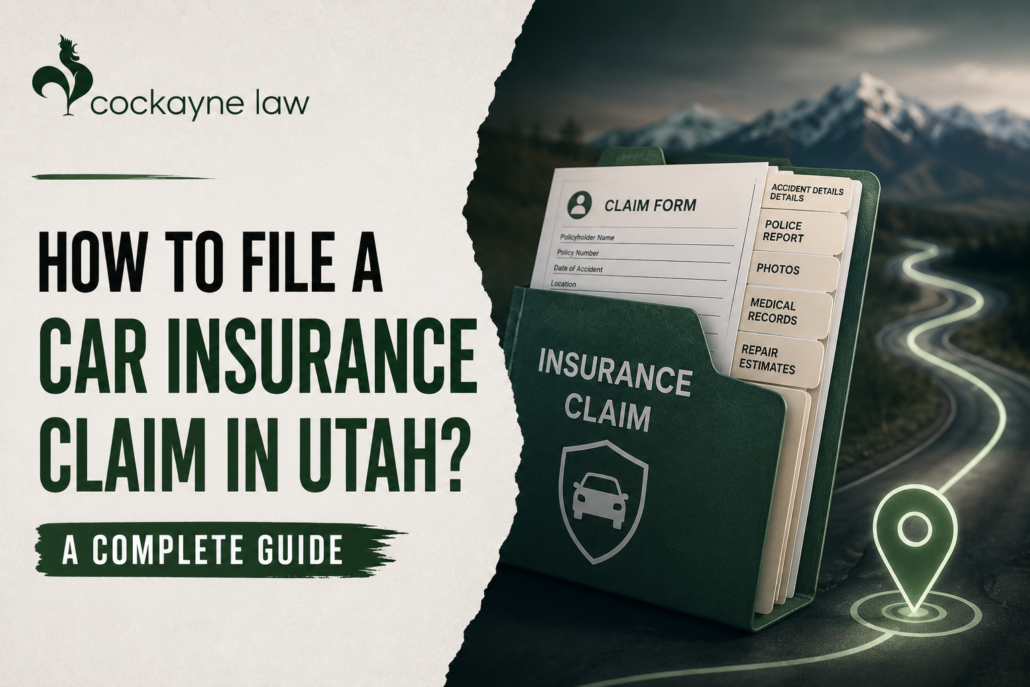
How to File A Car Insurance Claim in Utah? A Complete Guide
Get safe, call 911, swap info, and take photos. Use your PIP for early medical bills, then open repair and liability claims as needed. You may pursue the other driver once the bills top 3,000 dollars or injuries are serious under Utah car accident laws.
A crash shakes up your day in seconds and can affect car insurance and settlements. Your car is damaged, your neck hurts, and an adjuster may start calling before you reach home. This article gives you a Utah roadmap for filing a claim. You will see how PIP works, when the other driver’s insurer gets involved, what deadlines matter, and how to avoid mistakes that cut your payout.
Utah rules for car insurance after an accident are a little different because of no-fault coverage, so local know-how helps. If your injuries are more than minor and go beyond insurance for minor accidents, a quick call with a car accident attorney in Utah can protect your rights.
Keep this page handy as you move from the first report to the final check.
Key Points You Should Know
- Utah is a no-fault state
- PIP pays at least 3,000 dollars
- Report bigger crashes to the police
- Photos and medical visits matter
- Fault over 50 percent blocks recovery
- New 30,000, 65,000, 25,000 limits
- UM or UIM often fills shortfalls
- Watch four- and three-year deadlines
- Be careful with recorded statements
- Keep every bill and receipt
Utah Insurance Basics You Need Before You File
Utah uses no-fault rules for injuries. As a result, certain medical bills will be covered by your own policy through personal injury protection, or PIP. By law, PIP provides at least 3,000 dollars in medical benefits per person, and it can also include limited wage loss and household services depending on your policy. These benefits are paid without deciding who caused the crash.
For insurance policies issued or renewed after January 1, 2025, the liability limits have been changed. There are now minimums of 30,000 dollars for personal injury, 65,000 dollars for accidents, and 25,000 dollars for property damage. Some drivers choose a single combined limit of 90,000 dollars. Higher limits are allowed and can be smart if you have assets to protect, especially when considering how much car insurance goes up after an accident.
Uninsured and underinsured motorist coverage can be powerful add-ons. Utah insurers must offer them, and any rejection must be in writing. If a driver who hit you has no insurance or too little, these coverages can step in after you meet Utah’s injury threshold. Check your policy to confirm you have not waived them.
How To Deal With A Utah Crash After It Happens?
First, check for injuries and get to a safe spot. Call 911 and learn how to report a car accident properly. In Utah, drivers are required to call the police if anyone is injured or if property damage is estimated at 2,500 dollars. If officers do not make a report on scene, the state may require a written report within 10 days. When in doubt, call.
Collect the Basics:
- Names, phone numbers, and addresses
- Driver’s license and license plate numbers
- Insurance company and policy number
- Photos of the scene, damage, and road marks
Speak in simple facts. Do not guess about speed or fault. See a doctor soon, even if you feel mostly okay. Injury symptoms may not appear for a day or two after they have been sustained. Save every bill and discharge note. This documentation can help support your injury claim later.
It is imperative that you inform your insurer immediately. Early notice helps avoid coverage disputes and speeds up PIP payments. Order Utah car accident police reports once they are ready and keep them with your file.
How To File Your Claim Without Tripping Over Rules
Start a PIP claim for medical care. You will receive a claim number and forms from your insurer for submitting to your clinic. Answer completely and return forms fast so medical bills get paid. In Utah, PIP pays at least 3,000 dollars in medical expenses per person, no fault needed. Ask your adjuster to confirm any wage loss or household services benefits that may apply under your policy.
For car repairs, open a collision claim if you have that coverage. The insurer may use photos or send an appraiser. Ask the shop how supplements work if hidden damage appears. If your car is totaled, request the valuation in writing. It will include sales tax, title, and registration fees.
Don’t forget to be polite and brief when the other driver’s insurer calls. You are generally not required to provide a detailed recorded statement immediately. Share only the basics and avoid speculating about injuries until a doctor has seen you. If the situation feels tense, a car accident attorney Salt Lake City can handle calls and protect your claim.
What Is the Difference Between a First-Party and Third-Party Insurance Claim?
Many drivers get confused about whether they need to file a claim with their own insurance company or the at-fault driver’s insurance company.
A first-party claim is a claim filed through your own insurance policy. In Utah, this commonly includes Personal Injury Protection (PIP), uninsured motorist coverage, collision coverage, and underinsured motorist coverage.
On the other hand, a third-party claim is filed against the driver’s insurer. Once your injuries exceed Utah’s injury threshold or qualify as an intense injury, you may pursue compensation through a third-party bodily injury claim.
Examples of damages that can be recovered through a third-party claim include:
- Medical expenses beyond PIP coverage
- Lost income
- Future treatment costs
- Pain and suffering
- Property damage
- Loss of earning capacity
When you clearly understand third-party or first-party claims, it helps prevent unnecessary delays and further ensures that you pursue every available source of compensation efficiently.
Deadlines That Can Sink a Good Claim
Utah has strict filing windows. Missing deadlines and insurance claim timelines can sink a good claim
- Injury car accident lawsuits from car crashes are generally due within four years of the crash date.
- Cases involving property damage, including motor vehicle damage, usually have a three-year statute of limitations.
Special rules apply if a government vehicle or commercial truck was involved, and a truck accident lawyer Utah can help. Those windows are shorter. Your insurance policy may also set quick notice deadlines for PIP, UM, and UIM claims. Ask for those in writing and set reminders on your phone. Acting early keeps options open if talks stall.
What Helps and What Hurts Your Claim?
Helpful Habits
- See a doctor quickly, follow the plan, and keep visits
- Take clear photos and video at the scene
- Keep statements short and factual
- Save estimates, receipts, and rental records
Common Mistakes
- Gaps in care or missed visits
- Guessing about speed or fault on recordings
- Posting workout or vacation photos during treatment
- Authorizing broad medical releases for the other insurer
Utah follows a modified comparative negligence rule. You are penalized for your share of fault in a lawsuit. A person who is 50% or more at fault cannot recover anything. Careful evidence can keep that number low and protect your payout.
Can You Recover Diminished Value After a Car Accident in Utah?
Even after repairs are done, a vehicle that has been involved in the crash might be worth less than it was before the accident.
This loss in market value is mainly referred to as “diminished value.”
In the state of Utah, drivers may be able to pursue a diminished value claim against the at-fault driver’s insurance company when:
- The accident was caused by another driver
- The vehicle suffered significant damage
- Repairs do not restore the vehicle’s pre-accident value
Supporting a diminished value claim often requires:
- Repair records
- Vehicle history reports
- Market valuation evidence
- Professional appraisals
Because insurers constantly try to dispute such diminished value claims, keeping detailed documentation can strengthen your position during negotiations.
What Documents Do You Need to File a Car Insurance Claim?
Having the right paperwork can reduce disputes with the insurance company and make the claims move faster.
So, before you file your claim, don’t forget to collect:
- Police accident report
- Driver and insurance information from all parties
- Photos and videos of vehicle damage
- Medical records and treatment bills
- Repair estimates
- Rental car receipts
- Witness contact information
- Proof of lost wages if injuries prevent you from working
Keep all these records organized to support your claims. Remember that if you miss any important documentation, it can reduce settlement offers significantly.
Understanding Coverage Types That Come Into Play
PIP, The Starter For Medical Bills
PIP and how car insurance pays for medical bills kick in first for medical care. It pays at least 3,000 dollars per person and may include limited wage loss and household services depending on your policy. It applies regardless of fault.
Liability, When You Are At Fault
Bodily injury and property damage liability pays others when you cause a crash. As of 2025, the minimums are 30,000 per person, 65,000 per accident, and 25,000 for property damage. Many drivers carry more for peace of mind.
Accidents And Comprehensive Coverage
In the event of a collision, collision insurance pays for car repairs after a deductible has been paid. Comprehensive insurance handles non-crash losses like theft or hail.
UM and UIM, the Safety Net
If the at-fault driver has no coverage or too little, UM and UIM can step in. Utah requires insurers to offer these, and any rejection must be in writing, which is why many policies include them.
Dealing With Adjusters and Statements Without Losing Ground
Dealing with insurance adjusters and statements without losing ground is important. Adjusters have a job to do during insurance company investigations, and so do you. Be polite. Keep notes of every call with date and time. Ask for important items in writing, like coverage decisions and valuation details. In the case an adjuster asks you to make a recorded statement, be short and factual. Share what you saw and felt, not guesses about speed or fault. If you are still in treatment, say so and avoid giving final injury details too early.
When medical billing gets confusing, loop in your clinic’s billing staff and your PIP adjuster on the same email. Ask which bills are going to PIP and which will be sent later to the at-fault insurer once the threshold is met. If your PIP claim is wrongly denied, Utah law gives you tools to fight back in court for overdue benefits and interest. Talk with a personal injury lawyer Utah County if that happens.
If the other insurer asks for a broad medical release, you can decline and offer specific records tied to your injuries instead. This keeps unrelated history private and reduces the risk of a lowball offer.
What Happens If the At-Fault Driver’s Insurance Company Refuses to Pay?
Sometimes, the insurance company for the driver who caused the accident might deny responsibility or offer far less compensation than your claim is actually worth.
This can happen when insurers:
- Dispute fault
- Question medical treatment
- Argue injuries were pre-existing
- Claim damages are excessive
- Delay investigations
If the at-fault driver’s insurance company refuses to pay a valid claim, you might be able to:
- Submit additional evidence
- Request a formal review
- Use uninsured or underinsured motorist coverage
- File a personal injury lawsuit
- Pursue legal action against responsible parties
An expert Utah car accident lawyer can evaluate the denial and help determine the most effective next step.
Find the Leading Accident Injury Lawyer in Utah with Cockayne Law: Chris Cockayne
The team at Cockayne Law can assist you from start to finish if you want steady support from Chris Cockayne and his team. They focus on helping crash victims across Utah with clear advice and quick action.
From day one, the team can set up your PIP claim, organize your medical records, and guide you on car repairs and rentals. They understand Utah’s 3,000 dollar injury threshold and the serious injury list, so you get early guidance on whether a liability claim against the other driver is realistic. They also know how to use UM or UIM when the at-fault driver’s policy is not enough and how to keep your claim on track before Utah’s filing deadlines arrive.
Here is what clients value most: prompt updates, straight answers, and a clean plan for each stage. If an insurer stalls, they are ready to push your case forward. Whenever you need a car accident lawyer in Utah that keeps things simple and uses a results-driven approach, contact Cockayne Law.
Conclusion
In Utah, filing a car claim is straightforward when you follow a few steady steps. Get safe, call 911, see a doctor, and report the crash. Use PIP for early bills. Keep your proof neat and your statements careful. Once your medical bills pass 3,000 dollars or you have suffered a serious injury, you can pursue the at-fault driver. Deadlines matter, so do not wait. If you want help, firms like Cockayne Law work with these rules every day and can shoulder the hard parts while you heal. That way, you can focus on getting back to normal.
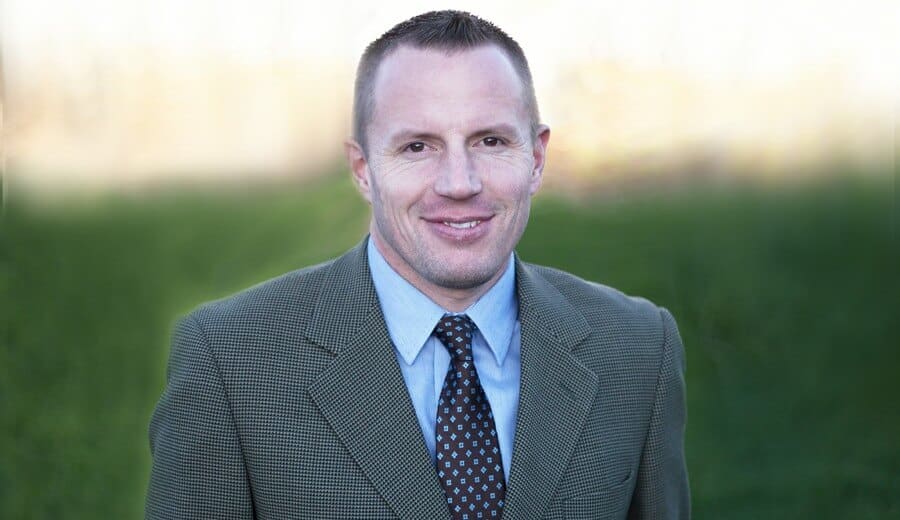
Chris Cockayne is a Utah-based personal injury attorney and the founder of Cockayne Law. With over 15 years of legal experience, Chris has handled a wide range of personal injury and motor vehicle accident cases. He writes about personal injury law, motor vehicle accidents, insurance claims, and related legal issues.
Know more about Chris Cockayne or my other social profiles like Avvo | Martindale | lawyers | Findlaw | Yelp | lexinter | Linkedin | Facebook | and X
This post is also available in: